Step into the humming heart of innovation where raw metal transforms into precision-engineered components, artistic masterpieces, and essential structural elements. Metal workshops are more than just places with tools; they are vital hubs of craftsmanship, technology, and economic activity that underpin countless industries. From intricate jewelry making to heavy industrial fabrication, these dynamic environments play a crucial role in shaping the physical world around us. In 2025, the capabilities and importance of modern metal workshops are more significant than ever, driven by technological advancements, evolving client demands, and a renewed appreciation for skilled trades.
Key Takeaways
- Diverse Applications: Metal workshops cater to a vast range of needs, from artistic creation and custom fabrication to industrial manufacturing and repairs.
- Technological Integration: Modern workshops extensively utilize CNC machines, laser cutters, robotic welding, and 3D metal printing to enhance precision, efficiency, and capabilities.
- Essential Equipment: A well-equipped metal workshop requires a foundational set of tools including welders, grinders, presses, and safety gear, alongside specialized machinery.
- Safety First: Strict adherence to safety protocols, including the use of Personal Protective Equipment (PPE) and proper machine operation, is paramount in any metal workshop.
- Skilled Workforce: The success of metal workshops relies heavily on the expertise, training, and continuous development of skilled metal fabricators, welders, and machinists.
What Defines a Modern Metal Workshop?
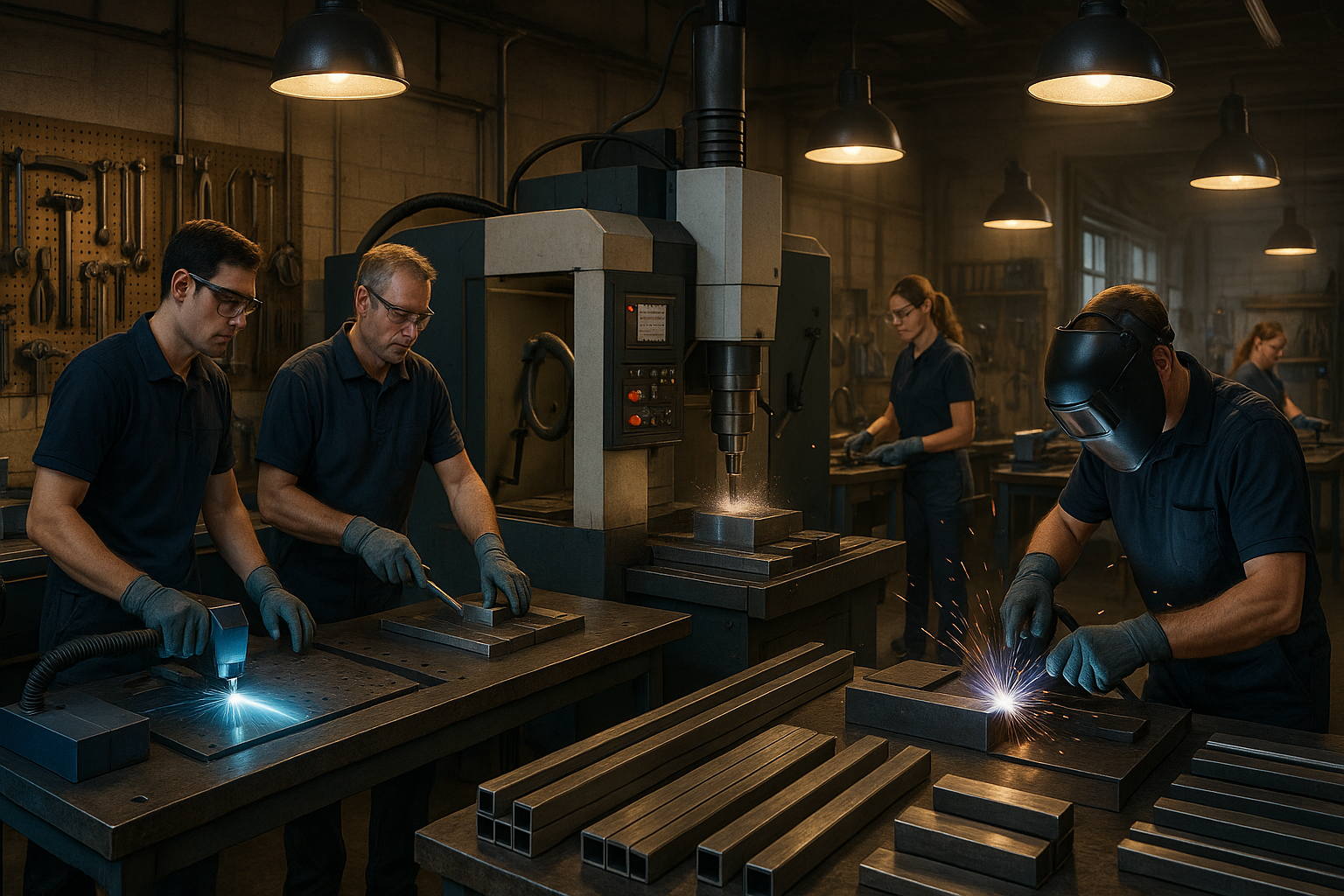
A modern metal workshop is a facility dedicated to shaping, joining, and finishing metal materials through various processes. These spaces can range dramatically in size and scope, from small, bespoke artisan studios to expansive industrial fabrication plants. Regardless of their scale, the core function remains the same: to manipulate metal to create specific forms and functionalities.
In 2025, a distinguishing characteristic of these workshops is their blend of traditional craftsmanship with cutting-edge technology. While classic techniques like forging and manual welding remain invaluable, the integration of computer-controlled machinery has revolutionized precision, speed, and complexity.
Core Activities in Metal Workshops
The activities performed in metal workshops are incredibly diverse. Here’s a glimpse:
- Cutting: Using tools like saws, shears, plasma cutters, laser cutters, and waterjets to precisely separate metal sheets or profiles.
- Forming: Bending, rolling, stamping, or pressing metal into desired shapes.
- Joining: Welding (MIG, TIG, Stick), brazing, soldering, riveting, or fastening metal pieces together.
- Machining: Removing material from a workpiece using lathes, milling machines, drills, or grinders to achieve specific dimensions and finishes.
- Finishing: Sanding, polishing, grinding, painting, powder coating, or anodizing to improve aesthetics or corrosion resistance.
- Assembly: Combining fabricated parts into a final product.
The specific combination of these activities dictates the specialization of a given workshop. For instance, an automotive repair shop’s metal workshop will focus heavily on welding and minor fabrication, while a custom furniture maker’s workshop might prioritize precision cutting and artistic forming.
Setting Up and Equipping Your Metal Workshop
Establishing a functional and safe metal workshop requires careful planning and investment. The specific equipment needed will depend heavily on the type of work intended, but there are fundamental categories that almost every workshop requires.
Essential Equipment
- Workbenches and Vises: Sturdy, heavy-duty workbenches are the foundation. Vises are crucial for securely holding workpieces.
- Cutting Tools:
- Grinders: Angle grinders for rough cutting, shaping, and deburring; bench grinders for sharpening tools.
- Saws: Chop saws for accurate straight cuts, band saws for curves and intricate shapes.
- Plasma/Laser/Waterjet Cutters: For advanced precision cutting of various metal thicknesses (often larger industrial workshops).
- Welding Equipment:
- MIG Welder: Versatile and relatively easy to learn, great for many applications.
- TIG Welder: Offers precise control, ideal for thinner metals and aesthetic welds.
- Stick Welder: Robust for heavy-duty applications and outdoor use.
- Oxy-Acetylene Torch: For cutting, welding, and heating.
- Forming Tools:
- Benders: Manual or hydraulic benders for tubing, sheet metal.
- Presses: Hydraulic presses for bending, stamping, or straightening.
- Measuring and Layout Tools: Rulers, squares, calipers, protractors, scribers, and punches are indispensable for accuracy.
- Hand Tools: Hammers, files, wrenches, pliers, clamps – a comprehensive set is vital.
- Safety Equipment: Absolutely non-negotiable.
Safety First: Protocols for Metal Workshops
Safety is paramount in any metal workshop. The risks are significant, ranging from cuts and burns to eye injuries and respiratory problems. Adhering to strict safety protocols is not just good practice; it’s a legal and ethical imperative.
- Personal Protective Equipment (PPE):
- Eye Protection: Safety glasses or goggles are mandatory.
- Hearing Protection: Earplugs or earmuffs when operating noisy machinery.
- Hand Protection: Gloves (appropriate for welding, grinding, or handling sharp edges).
- Respiratory Protection: Respirators for welding fumes, grinding dust, or paint fumes.
- Protective Clothing: Long-sleeved shirts, pants, and steel-toe boots to protect against sparks, heat, and falling objects.
- Machine Guarding: All machinery must have appropriate guards in place and be regularly inspected.
- Ventilation: Good ventilation systems are crucial to remove fumes and dust.
- Fire Safety: Fire extinguishers must be readily accessible, and welding areas should be clear of flammable materials.
- Tool Maintenance: Regular inspection and maintenance of all tools and equipment prevent failures and accidents.
- Training: All personnel must be properly trained on the safe operation of all machinery and tools.
The Diverse Applications of Metal Workshops
The versatility of metal workshops makes them indispensable across an incredibly broad spectrum of industries and artistic endeavors. Their ability to fabricate, customize, and repair metal components means they touch almost every aspect of modern life.
Industrial and Commercial Applications
- Manufacturing: Producing components for machinery, vehicles, electronics, and consumer goods. This includes everything from small, intricate parts to large structural elements.
- Construction: Fabricating structural steel for buildings, bridges, and infrastructure projects. Custom railings, gates, and architectural details are also common outputs.
- Automotive and Aerospace: Creating custom parts, performing repairs, and developing prototypes for vehicles, aircraft, and spacecraft.
- Marine Industry: Building and repairing boat components, propellers, and structural elements for ships and offshore platforms.
- Agriculture: Fabricating and repairing farm equipment, specialized tools, and irrigation systems.
- Oil and Gas: Manufacturing and maintaining pipelines, drilling equipment, and processing plant components.
- Mining: Producing durable parts for heavy machinery and infrastructure within mining operations.
Artistic and Custom Fabrication
Metal workshops are not solely focused on industrial applications; they are also vibrant centers for artistic expression and bespoke craftsmanship.
- Sculpture and Art: Artists utilize metal workshops to create large-scale sculptures, intricate installations, and decorative pieces.
- Jewelry Making: Precision workshops focus on working with precious metals to create intricate jewelry designs.
- Custom Furniture: Designers commission workshops to create unique metal furniture pieces, combining aesthetics with functionality.
- Architectural Features: Crafting custom gates, railings, balustrades, and decorative elements that enhance building aesthetics.
- Restoration: Recreating historical metal components for antique vehicles, buildings, or artifacts.
The demand for specialized metal workshops that can handle unique projects is consistently high. Whether it’s a single, custom-made prototype or a large batch of identical parts, these facilities are equipped to deliver.
The Business of Metal Workshops in 2026
Operating a successful metal workshop in 2026 involves more than just technical skill; it requires a keen understanding of business principles, market trends, and client management. The industry is competitive, but opportunities abound for those who can offer specialized services, high-quality work, and excellent customer service.
Business Models
Metal workshops often adopt one or a combination of several business models:
- Job Shop/Custom Fabrication: Focused on producing unique, one-off, or small-batch custom parts and projects for individual clients or businesses. This model thrives on flexibility and problem-solving.
- Contract Manufacturing: Taking on larger production runs for other companies, often specializing in a particular type of part or material. This requires efficient processes and quality control.
- Repair and Maintenance: Offering welding, fabrication, and machining services to repair broken equipment, vehicles, or structures.
- Prototyping: Working with designers and engineers to create initial versions of new products, often involving iterative design and rapid fabrication.
- Specialty Services: Focusing on niche areas like artistic metalwork, specific metal types (e.g., titanium, exotics), or highly specialized processes (e.g., precision laser cutting, hydroforming).
Key Factors for Success
- Skilled Workforce: Highly trained and experienced fabricators, welders, and machinists are the backbone of any workshop. Continuous training and upskilling are crucial in 2025.
- Quality Control: Implementing robust quality assurance processes ensures that products meet specifications and client expectations.
- Customer Relationships: Building strong relationships with clients through clear communication, reliability, and delivering on promises.
- Technology Adoption: Investing in and effectively utilizing modern machinery (CNC, CAD/CAM software, robotics) to improve efficiency, precision, and expand capabilities.
- Efficient Operations: Streamlining workflow, managing inventory effectively, and optimizing production schedules.
- Safety Compliance: Maintaining an impeccable safety record is not only ethical but also vital for reputation and insurance purposes.
- Sustainability Practices: In 2025, adopting eco-friendly practices, such as waste reduction, material recycling, and energy-efficient operations, is becoming increasingly important.
Innovations and Future Trends in Metal Workshops
The landscape of metal workshops is continuously evolving, driven by technological advancements, material science, and shifting economic demands. In 2025, several key trends are shaping the future of metal fabrication.
Automation and Robotics
Robotic welding and material handling systems are becoming more commonplace, particularly for repetitive tasks and large production runs. This increases efficiency, consistency, and worker safety by moving personnel away from hazardous operations. Automation allows workshops to produce higher volumes with greater precision.
Advanced Manufacturing Technologies
- Additive Manufacturing (3D Metal Printing): While still relatively specialized, 3D printing with metal powders allows for the creation of incredibly complex geometries and lightweight parts that were previously impossible to fabricate. This technology is gaining traction for prototyping and specialized, high-value components.
- Advanced CNC Machining: Multi-axis CNC machines offer unparalleled precision and the ability to create intricate parts with fewer setups, reducing production time and costs.
- Laser and Waterjet Cutting: These technologies continue to advance, offering faster, cleaner cuts on a wider range of materials and thicknesses, with minimal material waste.
Smart Workshops and Industry 4.0
The concept of the “smart workshop” is gaining momentum. This involves integrating digital technologies to create interconnected and intelligent production environments.
- IoT (Internet of Things): Sensors on machines collect real-time data on performance, predictive maintenance, and operational efficiency.
- Data Analytics: Analyzing this data helps optimize processes, identify bottlenecks, and improve overall productivity.
- CAD/CAM Integration: Seamless integration between design (CAD) and manufacturing (CAM) software streamlines the entire production lifecycle, reducing errors and lead times.
- Augmented Reality (AR): AR tools can assist technicians with assembly, quality checks, and training by overlaying digital information onto the physical workspace.
Sustainable Practices
With a global focus on environmental responsibility, metal workshops are increasingly adopting sustainable practices. This includes:
- Material Recycling: Maximizing the recycling of metal scraps and offcuts.
- Energy Efficiency: Investing in energy-efficient machinery, lighting, and heating/cooling systems.
- Reduced Waste: Optimizing cutting patterns to minimize material waste and exploring alternative, more sustainable materials where possible.
- Responsible Sourcing: Choosing suppliers who adhere to ethical and sustainable sourcing practices.
These trends signify a future where metal workshops are even more precise, efficient, sustainable, and capable of producing highly complex and customized metal solutions.
Conclusion
Metal workshops stand as pillars of modern industry and innovation. From the foundational tools that have been used for centuries to the cutting-edge automation and digital integration defining 2025, these environments are constantly evolving. They are where ideas take tangible form, where precision meets power, and where skilled hands create the components that build our world. The diverse applications, from industrial giants to bespoke art pieces, underscore their universal importance.
For anyone considering a career in metalworking, looking to commission custom fabrication, or simply appreciating the craftsmanship involved, understanding the inner workings of a metal workshop reveals a world of intricate detail and robust capability. The future of metal fabrication promises even greater advancements, with smart technologies and sustainable practices leading the way.


